
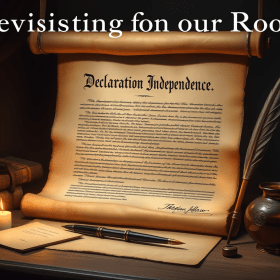
They tell us that history repeats itself and that if we study the past, we know what to expect next. Even still, it seems that every time and day is different and that we have advanced so far that everything seems unprecedented. It is not a different time, though. It is always now and like the water in the river, people are the same as they always have been, driven to bond and protect one another, all the of the same and sacred value, or to divide and separate into self interest and protection. Before Linden Johnson and John Kennedy and the movement to advance the original promises of Civil Rights for all, there was a Civil War involving classism against equality, government control versus free will. Ahead of this still was the establishment of a nation of free people, lead by immigrants seeking the chance to be free and equal without division of class. Many great people forged this movement but it was challenged as it was built and a degree of control and division were built in. The Native population suffered the greatest exploitation but the atrocities of creating a “land of opportunity” are beyond imagination and of horrific depths, but still the cry for equality was demanded and pushed for by those who saw all people as people and of equal sacred value. Many leaders tried to uphold these rich ideals of the nation’s founding but there was a president who was rouge and unbound by the oath sworn to the Constitution and cared not for the promises of the founding documents because he had his own path and agenda to lead the nation into a greatness he wanted to build. Andrew Jackson pushed for national expansion and removal/ extermination of Natives for America to prosper. He did things his own way. The Supreme Court said his actions were unconstitutional and he responded by stating he had control of the armed forces and no one could stop him. He faced impeachment but retained power. We can watch things unfold but they have unfolded before, when do we decide to take lessons and break the cycles?
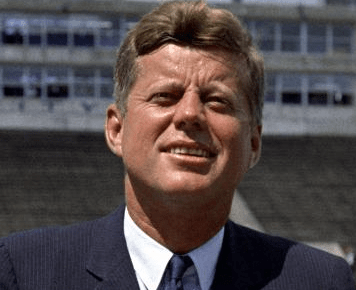
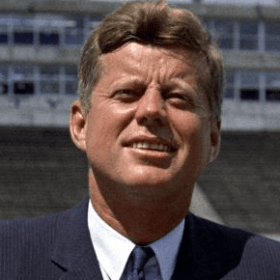
Current events bring into question the role of the people and government to serve each other, and so, we’d like to represent this feature on John Kennedy.
[Original publication date 27 September 2020]
On January 20, 1961, John Fitzgerald Kennedy arose as the nation’s 35th president. The sun was shining but the air was cold, it was nearly 20-degrees Fahrenheit, yet over 20,000 people came before the Capitol to take witness of the momentous time. People had expectations but the public did not know it would be a landmark inaugural address.
President Kennedy, after being sworn in on the Fitzgerald family bible, took off his topcoat and demonstrated the power the nation needed. People were listening across the country and across the globe. It was necessary to inspire hope in this nation recovering from war, after war, after war. He needed people to take comfort that the Cold War would close, and we would emerge victorious. He also needed the world to believe in peace, in the nuclear age. He was nervous. He had just become president, in all of this, and needed to make an impression on the global community of the world. Shortly before this speech was to begin, he whispered to an advisor, “I don’t want people to think I’m a windbag.”
President John F. Kennedy spoke, and is famously remembered for, the following words at his inaugural address, “Ask not what your country can do for you – ask what you can do for your country,” and challenged a generation to do more. These words are inspiring, and truly powerful rhetoric. When these words were spoken, America was at a turning point.
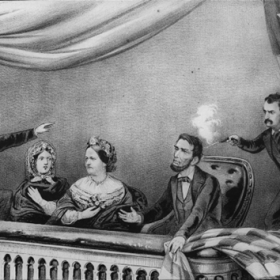
After Kennedy said these words, this generation saw their government respond to calls, or demands, for change, improvement in social justice and a future of hope and endless possibilities. This generation also saw some of their most powerful leaders taken away by assassination, including the man who spoke these famous words. People understood change was possible but it was a two way street. If your country doesn’t serve you, fix it.
What about the people who have been forgotten by their country? Do they owe their country a brighter future? Is it their responsibility to serve the needs of a country that may have left them homeless, uneducated, poor, hopeless, desperate, incarcerated as a slave? Do we need a new country? Do we need a new government?
It is important to remember these word, this time and era, but that wasn’t all JFK said at the tail of his speech. He also said, “My fellow citizens of the world: ask not what America will do for you, but what together we can do for the freedom of man.”
That, I believe is the more important question to ponder. What can we do together for the freedom of man?
President Kennedy was elected by one of the smallest margins in history, yet, after this speech, he earned approval from 75% of the country.
Some other things that were said that day in his speech were:
“If a free society cannot help the many who are poor, it cannot save the few who are rich.”
“All this will not be finished in the first one hundred days. Nor will it be finished in the first one thousand days, nor in the life of this Administration, nor even perhaps in our lifetime on this planet. But let us begin.”
“The energy, the faith, the devotion which we bring to this endeavor will light our country and all who serve it—and the glow from that fire can truly light the world.”
“In the long history of the world, only a few generations have been granted the role of defending freedom in its hour of maximum danger. I do not shrink from this responsibility—I welcome it.
Tell the Senate: Delay the nomination of Amy Coney Barrett
Amy Coney Barrett’s nomination to the Supreme Court would be a disaster for our country and our movement. Add your name if you agree: the Senate must do all they can to delay the nomination process.




 The Observations of Jaco